Buying an 11 × 17 copier
Check the tray that feeds tabloid paper, the paper weight it can print on both sides, and whether the feeder can scan both sides of an 11 × 17 original. Each determines whether your everyday jobs will run.
Four machines that print on tabloid
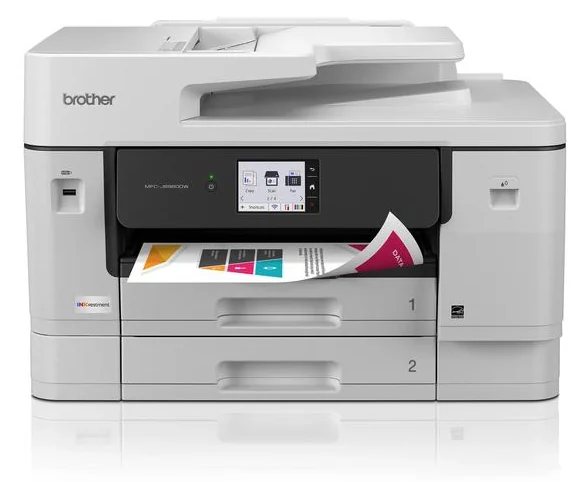
Brother’s two desktop models both print on two sides of ledger paper. At Brother’s listed prices, an extra $80 buys automatic two-sided scanning and a second drawer. For shared offices, compare floor-standing models using the same stock, service terms and workload.
| Model | Two-sided output | Feeder and originals | Published equipment price |
|---|---|---|---|
| Brother MFC-J6560DWDesktop color inkjet | Automatic on plain or recycled ledger stock. | 50-sheet single-sided feeder. For occasional color plans or two-sided handouts. Use the glass and turn the original over to copy both sides. | $309.99New from Brother U.S. |
| Brother MFC-J6960DWDesktop color inkjet | Automatic on plain or recycled ledger stock. | 50-sheet single-pass duplex feeder. For two-sided tabloid originals and offices that want to keep letter and ledger in separate trays. | $389.99New from Brother U.S. |
| Ricoh IM 4000Office monochrome laser | Ledger in the adjustable trays. Ricoh lists duplex stock up to 256 gsm. Test the tray and finisher you’re buying. | 220-sheet single-pass feeder. Check the installed feeder and scan a two-sided ledger original on the exact used unit. | $3,390Refurbished, plus $400 shipping from The Copier Source. |
| Epson AM-C4000Office color inkjet | 11 × 17 in standard cassettes. Epson’s duplex media limits vary by tray and stock. | About 150 sheets at 80 gsm. Epson’s duplex feeder lists 11 × 17 originals. | $7,241REMC bid for eligible Michigan buyers, April–December 2026. |
The prices cover different equipment and sales terms. Compare delivery, setup and service separately. Check Brother’s two-sided copy instructions. Estimate Epson ink and service costs.
The two Brother models share ink. Compare LC506 prices, annual ink and independent lab results.
Ledger, tabloid and A3 paper sizes
Ledger and tabloid are names for the same 11 × 17-inch sheet. The printer menu may list either name. A3 is wider and shorter, so select the size that matches the document and the stock you loaded.
For designs that run to the trimmed edge, check the printable area on larger stock and the size supported by the finisher. Calculate space for bleed and crop marks.
- U.S. legal
- 8.5 × 14 in
- Ledger or tabloid
- 11 × 17 in
- A3
- 297 × 420 mm
Run an actual-size duplex test
The two-page PDF has front and back labels, two five-inch rulers, edge marks and four alignment targets. Give the dealer the same PDF, paper and requirements for every machine.
Download the 11 × 17 test (PDF)- Print on your stock. Pick the actual tray, set scaling to 100% and print both pages on one sheet with long-edge flip. Measure the rulers and turn the sheet to see whether both sides are upright.
- Scan the printed sheet. Use the feeder in two-sided mode. Open the received PDF and check the dimensions, page order and edge marks. Then try a representative stack of your own originals.
- Compare the bill. Note the meter before and after the print. Ask the dealer how those readings translate to invoice charges for color, black-and-white and larger sheets.
Check where the large scan goes
Scan an 11 × 17 example to the folder or app your team uses. Open the file with a staff account to check small text, cropped edges and whether search can find a known phrase. Check whether the searchable-PDF feature needs a license.
If you need to split batches, extract fields or route files automatically, Paige from Ademero can pick up files from an approved folder on Windows. Ademero operates CopierGuide. See the copier-to-Paige setup and pilot.
Get an installed 11 × 17 quote
Give the dealer your ZIP, monthly volume, largest originals and the stock you need to print on. Get the tray, feeder, finisher, delivery and page charges in writing.